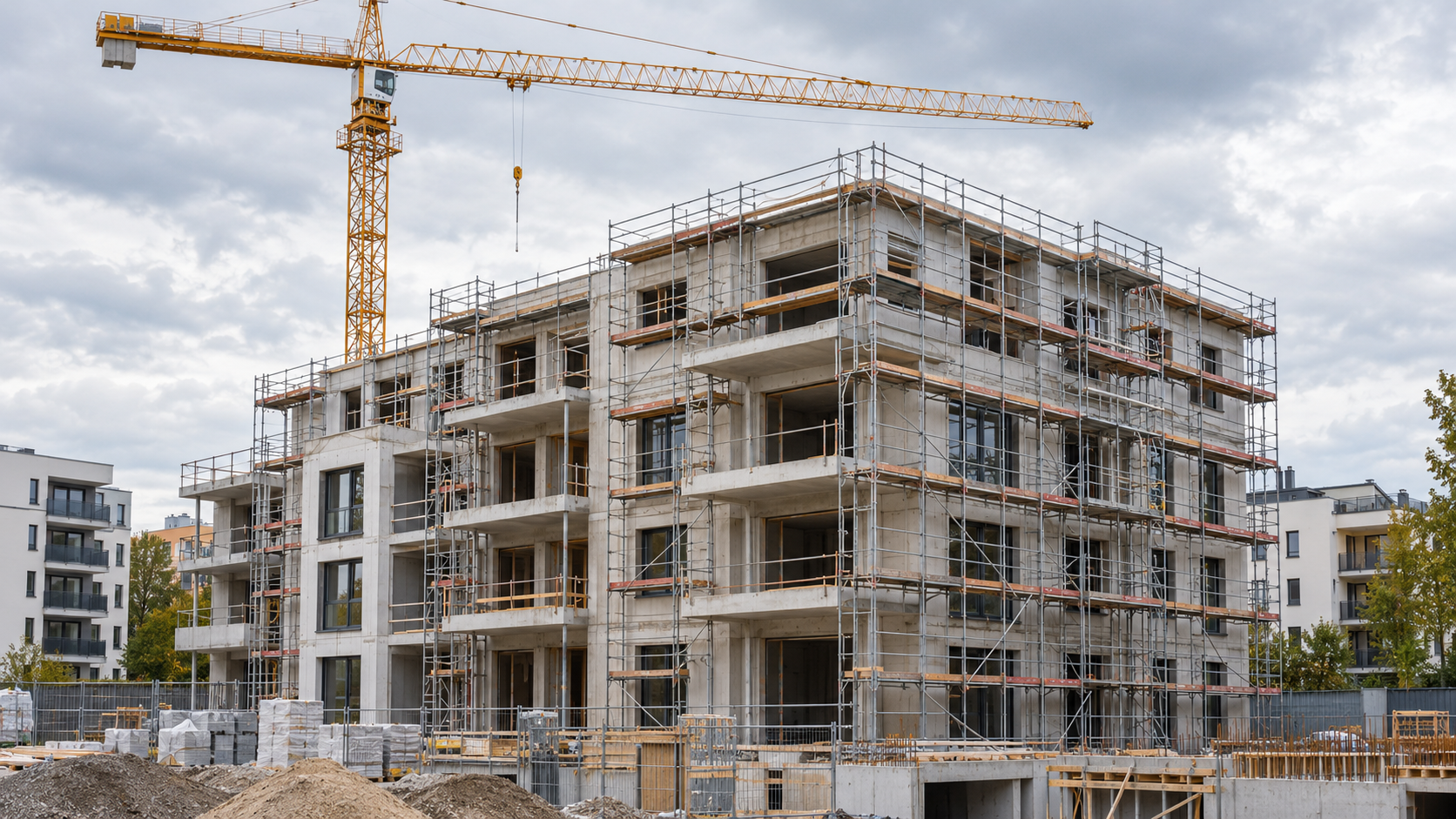
PANDION files for self-administered insolvency

On 10 August 2026, German property developer PANDION applied for self-administered insolvency proceedings at the Cologne court. The application covered the parent company and five other group companies, after a financing plan failed and liquidity ran short.
Our visits to PANDION
We have visited PANDION’s offices in Düsseldorf and Berlin several times. Its Berlin office is near Unter den Linden; in Düsseldorf, we have also seen several distinctive residential and office projects developed by the company.
PANDION has focused on location, design and quality, with prices at the higher end of the market. In an August 2026 company release, it said that it was planning or building around 3,800 homes across Germany, with a total project sales volume exceeding €4.8 billion. Its insolvency filing is therefore a significant development for the property sector.
The immediate cause: a funding shortfall
According to PANDION, an important financing arrangement it had expected did not materialise. Subsequent funding measures could not close the gap, leaving the company short of liquidity.
Developers often tie up capital in land and construction. When sales slow, cash returns later, while interest, building costs and payroll still fall due. Having projects on the books does not necessarily mean having the cash to meet immediate obligations.
The difficulties widened after the initial filing. In late August, PANDION announced that 11 further project companies would file for insolvency. In September, it announced filings for two more project companies and began a process to seek investors.
Why even premium projects can come under pressure
Higher interest rates increase developers’ financing costs and reduce buyers’ budgets. Even a well-designed property may take longer to sell if the monthly payment is beyond a buyer’s reach.
Labour, materials and construction remain costly. A weak economic climate can also dampen demand from buyers and investors. When selling prices cannot rise and costs are hard to reduce, margins come under pressure even in premium developments.
Planning, approvals and administrative procedures can extend a project’s timeline. The longer a project takes, the longer capital remains tied up. Together, these pressures make it harder for highly indebted developers to withstand a funding shock.
Germany’s housing dilemma: fewer new homes, strong rental demand
Many homes have become harder to sell because prospective buyers cannot afford them. Yet the underlying need for housing remains, and rental markets are still tight.
When developers struggle and new projects are delayed, the supply of new homes slows. Some would-be buyers keep renting, increasing competition for the limited number of rental properties and adding pressure to rents.
We see this contrast in our own work: sales often take longer, while rental listings can attract enquiries quickly. The strain on developers may deepen the mismatch between housing supply and demand.
Sources: PANDION company announcement; DeSH Real Estate site visits and market observations.