Renting in Germany: how much income goes towards housing costs?
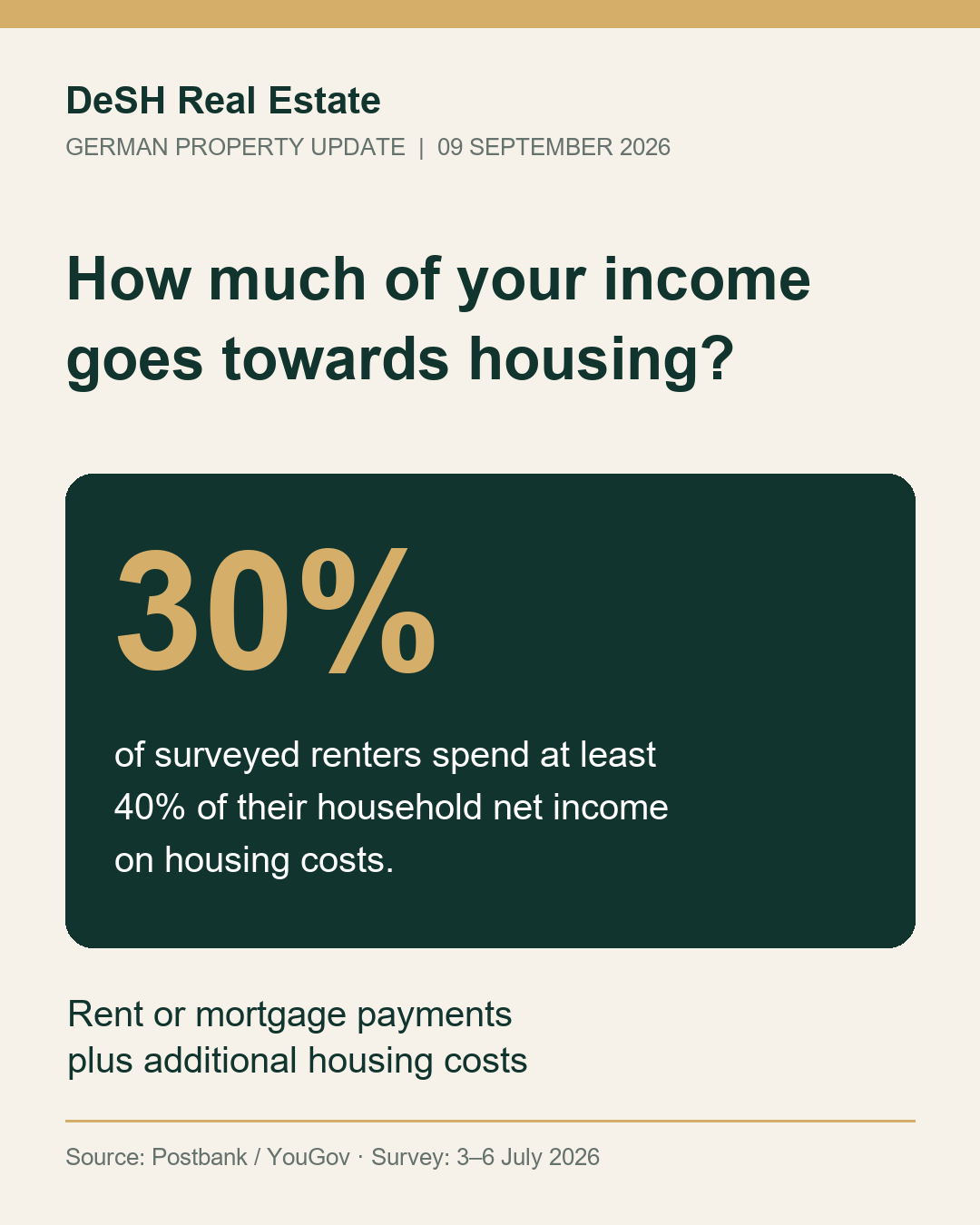
A July 2026 YouGov survey for Postbank found that 30% of surveyed renters spend at least 40% of household net income on housing, including ancillary costs.
What the survey found
A Postbank report published on 9 September 2026 describes a YouGov survey conducted in July 2026. Among the renters surveyed, 30% spent at least 40% of their household net income on housing; 13% spent at least half. Among owner-occupiers, the corresponding shares were 15% and 5%. Housing costs here include rent or mortgage payments plus ancillary costs, not just the basic rent.
| Share of household net income spent on housing | Renters | Owner-occupiers |
|---|---|---|
| 40% or more | 30% | 15% |
| 50% or more | 13% | 5% |
What it means for a housing budget
High housing costs can leave less room for savings and a future deposit. These survey figures compare different households; they do not show that buying is cheaper than renting for any particular person.
If you are considering a purchase, compare your current total housing costs with the future mortgage payment, property charges and maintenance allowance. Check how much cash would remain after the deposit and transaction costs, and keep an emergency reserve. Compare homes in the same area and of a similar standard over the period you expect to live there.
Survey and source
The online survey ran from 3 to 6 July 2026 and included 2,016 respondents, among them 1,109 renters and 809 owner-occupiers. Results were weighted. Postbank published its analysis on 9 September 2026; these are survey findings, not a live measure of housing costs or an individual financing offer. Source: Postbank housing costs report.
DeSH Real Estate offers purchase support and financing guidance in Germany. We can help you review a property and your budget, while financing terms depend on your individual situation and the lender's offer.